Lesson · Cotton
Cotton
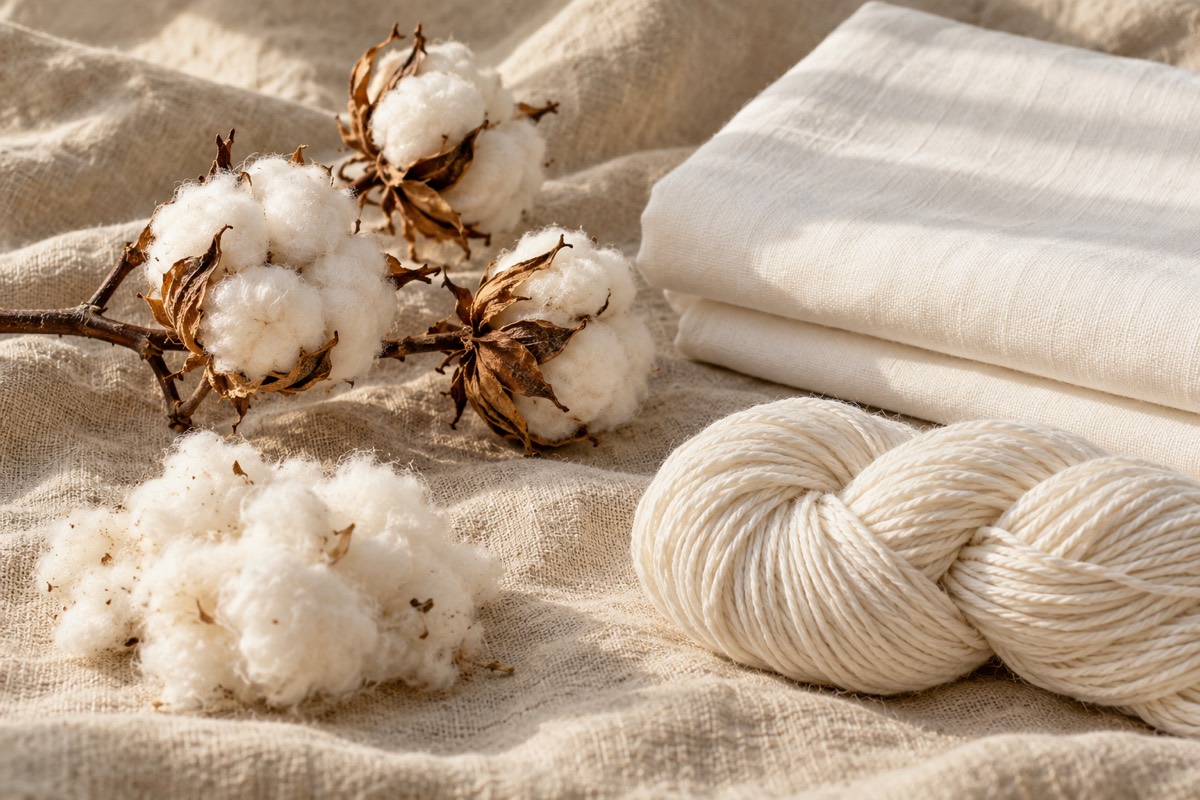
#4 organic, #14 regular in our Fabric RankingThe world’s favorite natural fiber, from the fluffy seed hairs of the cotton plant.
- Is cotton breathable?Yes. Cotton absorbs moisture (8.5%) and lets air through, which is why it feels comfortable in warm weather and on skin.
- Is cotton sustainable?It depends how it’s grown. Regular cotton is one of the thirstiest crops: 7,000–29,000 liters of water per kilo of fiber (WWF). It uses 10% of the world’s pesticides and 16% of its insecticides. That’s why it gets an F for water and chemicals.
- What does organic cotton change?No synthetic pesticides or fertilizers. A Textile Exchange study found 91% less irrigation water (95% of its water is rain) and 46% lower climate impact than regular cotton.
- Is cotton biodegradable?Yes. In water, cotton fibers lost 74% of their weight in 220 days (NC State). It sheds fibers when washed, but no plastic.
- Cotton vs polyester?Cotton is kinder to skin and goes back to nature at the end. Polyester lasts longer and needs less water. In our grades cotton is a C overall, organic cotton an A, polyester an F.
- What about recycled cotton?Very low impact (A for water and climate), but its shorter fibers are weaker, so it’s usually blended. A blend with polyester can’t be composted or separated.
- Our grades (A–F)Regular cotton C (Water F · Chemicals F · Climate B · Durability B · Back to nature A · Microplastics A · Skin & comfort A) · Organic cotton A · Recycled cotton A. Regular cotton scores 57: water and chemicals at 15 are severe harms, which take 5 points off. How we grade
- What to look forGOTS (organic, from field to finished piece), OCS (organic content), OEKO-TEX Standard 100 (tested for harmful substances). Choose 100% cotton over cotton blended with polyester. Check a piece with the Clothing Check
Sources: Textile Exchange LCA of organic cotton (via GOTS) · Sustain Your Style · Shuvo 2020 (citing WWF) · Zambrano et al. 2019, NC State